Custom B2B Travel Booking Software for Travel Agents – Softzix
Build custom B2B travel booking software for agents with supplier APIs, agent management, flexible pricing, booking workflows and scalable travel portal features.
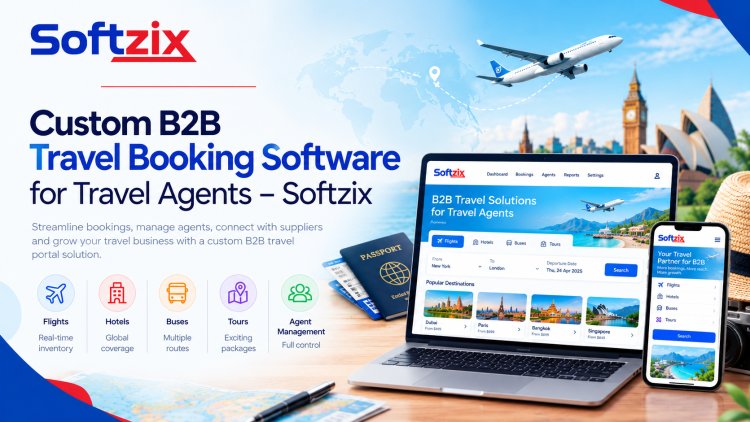
Travel agents need more than a website to manage bookings. They need a system that helps them access travel inventory, manage sub-agents, apply pricing rules, track transactions, and handle bookings without relying on manual processes for every request. Custom B2B Travel Booking Software can bring these activities together on a single platform tailored to a travel business's requirements.
For startups, travel wholesalers and established agencies, the right Travel Booking Software can support a more organised distribution network and create room for future growth. The key is to choose a solution that fits your business model, supplier connections and day-to-day operations.
What Is B2B Travel Booking Software?
B2B Travel Booking Software is a platform that allows travel businesses to distribute and sell travel products to other businesses, such as travel agents, sub-agents, and resellers.
Instead of processing every request manually, a travel company can give its registered agents access to a central booking portal. Depending on the configuration, agents can search available services, make reservations, manage customer details,s and access booking documents.
Common features include:
-
Agent and sub-agent registration
-
Flight, hotel, bus, and tour booking
-
Supplier API integration
-
Agent-specific pricing and commissions
-
Booking history and transaction reports
-
Payment and credit management
-
Cancellation and refund workflows
-
Automated booking confirmations and vouchers
The exact features depend on the business's needs and the suppliers connected to the platform.
Why Travel Agents Need Custom Travel Booking Software
A small travel agency and a large travel wholesaler may both sell flights and hotels, but their operational requirements can differ significantly.
One agency may need a simple agent login and booking dashboard. Another may require multiple supplier connections, different commission structures, credit limits, and separate access for sub-agents.
Custom Travel Booking Software allows these workflows to be planned around the business instead of forcing the team to work around a fixed system.
1. Centralised agent management
An admin dashboard can help a business create agent accounts, assign permissions, review bookings and monitor account activity.
For example, a wholesaler working with several sub-agents may want each agent to view only their own bookings and financial records. Role-based access can help organise these responsibilities.
2. Flexible pricing and commission rules
Travel businesses may use different markups, negotiated rates and commission arrangements for different agents.
The software should make these rules clear and manageable. It should also help prevent confusion between supplier costs, selling prices and the commission earned on a booking.
3. Simplified booking operations
A centralised system can bring search, reservation details, booking status and voucher access into one workflow. This reduces the need to move repeatedly between spreadsheets, email conversations and separate dashboards.
Essential Features of a B2B Travel Portal
When planning a custom Travel Portal Software solution, focus on the features that directly support your booking and distribution processes.
Agent dashboard and account controls
Agents should have a clear view of their bookings, account information, available services, and transaction history. Administrators should be able to manage permissions and review account activity.
Real-time travel inventory
Flight and hotel availability can change frequently. API integrations can help retrieve current inventory, prices,s and relevant booking conditions from connected suppliers.
The platform should also communicate when a price changes or a requested option becomes unavailable before the booking is confirmed.
Wallet, credit and payment management
Depending on the business model, a B2B portal may use prepaid balances, approved credit limits or online payments.
Important considerations include transaction records, balance updates, payment status, reconciliation and controls for failed transactions. Credit facilities should only be enabled under clearly defined business rules.
Booking confirmations and reporting
Agents need access to confirmation details, booking references, invoices or vouchers where applicable. Administrators may also need reports covering bookings, sales, commissions, cancellations,ns and outstanding balances.
These features help the business review its operations without manually combining information from different sources.
How API Integration Connects Travel Suppliers
A Travel Booking Software Developer can integrate external APIs to connect the portal with travel suppliers and inventory systems.
For example, a platform may use:
-
Flight APIs to retrieve flight availability, fares, and booking information.
-
Hotel APIs to access room availability, rates, and reservation details.
-
Bus APIs to support route searches, seat availability and ticket bookings.
-
Tour package APIs to display itineraries and available holiday products.
The integration process should account for authentication, supplier-specific data formats, error handling, booking confirmations, cancellations,s and refunds.
It is also important to establish what happens when a supplier API is unavailable or returns incomplete information. Clear error messages, transaction tracking, and appropriate retry rules can help prevent duplicate requests and confusion.
White Label vs Custom B2B Travel Booking Software
Both options can work for travel businesses, but they suit different requirements.
White Label Travel Booking Software generally provides an existing platform that can be presented under a business's own branding. It can be suitable when the standard features and workflows meet the company's requirements.
Custom B2B Travel Booking Software is developed or adapted around specific business processes, integrations, and access rules. It may be more suitable when an agency needs specialised pricing, unique agent workflows,s or connections to existing business systems.
Before deciding, compare the available features, customisation limits, ownership arrangements, integration costs, maintenance responsibilities and future upgrade options.
How to Choose a Travel Booking Software Development Company
Selecting a Travel Booking Software Development Company requires more than reviewing a demonstration. The provider should understand how your agents, suppliers, payments,ts and bookings interact.
Ask these questions before starting development:
-
Can the platform support agents, sub-agents and administrators?
-
Which flight, hotel, bus, and tour APIs can be integrated?
-
Can different pricing and commission rules be configured?
-
How will booking changes, cancellations and refunds be handled?
-
What security controls protect agent accounts and transaction data?
-
Can the portal integrate with existing CRM or accounting systems?
-
What testing, documentation,n and technical support are included?
-
Who is responsible for ongoing maintenance and supplier API updates?
Request a demonstration or project proposal based on your actual requirements. This makes it easier to compare providers and identify missing functionality before development begins.
How Softzix Can Support Travel Portal Development
Softzix offers travel technology solutions covering flight, hotel, bus, and tour package APIs, along with travel software for B2B and B2C business models.
These capabilities can provide a starting point for businesses planning a travel portal with connected inventory and booking workflows. The appropriate solution will depend on the required modules, supplier access, agent structure, and level of customisation.
Before committing to a project, discuss the intended booking process, required integrations, expected user roles, and future expansion plans with the Softzix team. Confirm the specific features, implementation scope, costs,s and support arrangements in the project proposal.
Conclusion
Custom B2B Travel Booking Software can help travel agents and wholesalers manage bookings, supplier connections, pricing rules and agent networks through a more structured system.
The best solution is not necessarily the one with the longest feature list. It is the one that supports your current business processes, provides the integrations you need,ed and can be maintained as your requirements change.
By defining your workflows and evaluating the technical capabilities of a Travel Booking Software Provider, you can make a more informed decision about building a platform for your travel business.
Frequently Asked Questions
1. What is B2B Travel Booking Software?
B2B Travel Booking Software is a digital platform that allows travel companies to distribute and sell services to registered agents, sub-agents, and resellers through a central booking system.
2. What features should B2B Travel Booking Software include?
Common features include agent management, travel inventory search, supplier API integration, pricing and commission controls, booking management, payment tracking, reporting,g and cancellation workflows.
3. Can I build custom Travel Booking Software for my agency?
Yes. Custom software can be developed around your agency's booking processes, supplier connections, pricing rules, user roles,es and reporting requirements.
4. What is the difference between B2B and B2C travel software?
B2B travel software focuses on business users such as travel agents and resellers. B2C software allows individual customers to search and book travel services directly.
5. Can travel booking software integrate multiple suppliers?
Yes. APIs can connect a portal with multiple flight, hotel, bus, or tour suppliers. Each integration must be assessed for compatibility, commercial access, booking workflows,s and technical requirements.
6. Is white-label software better than custom development?
White-label software may suit businesses with standard requirements and a preference for an existing platform. Custom development may be more appropriate when specialised workflows or integrations are essential.
7. How much does custom B2B Travel Booking Software cost?
The cost depends on the number of booking modules, API integrations, user roles, custom features, payment requirements, and ongoing support. Request a project-specific estimate after defining the scope.
8. How do I choose a Travel Booking Software Provider?
Compare relevant travel technology experience, available APIs, customisation options, security practices, project documentation, support arrangements,s and total ownership costs before making a decision.
What's Your Reaction?